
Saddam Khalifa: A New Generation at the Helm of Libya’s Military Leadership
On August 11, 2025, Libya marked a symbolic moment in its modern military history. As the Libyan National Army celebrated the 85th anniversary of its founding, Field Marshal Khalifa Haftar appointed Lieutenant General Saddam Khalifa as Deputy General Commander of the Army—a decision aligned with the General Commander’s Vision 2030 to modernize and strengthen the armed forces.
Born in Benghazi, Saddam Khalifa grew up in a household shaped by discipline, military values, and pan-Arab ideals. As the youngest son of Field Marshal Haftar, his early life was closely intertwined with the culture of the armed forces, making a military career a natural path.
His formative years coincided with one of Libya’s most turbulent periods. During the February 17 Revolution in 2011, Saddam Khalifa was among the young Libyans engaged in the events that reshaped the country. This experience deepened his understanding of Libya’s political and security challenges and reinforced his belief that national stability requires a unified and professional military institution.
Educated at the Royal Military College in Jordan, where he graduated in 2017, Saddam Khalifa continued to build an extensive academic and professional portfolio. His training includes advanced courses in special operations, military intelligence, artillery, and information security, alongside counter-terrorism specialization in Egypt. He later earned a PhD in Military Sciences, reflecting a rare combination of operational and strategic expertise.
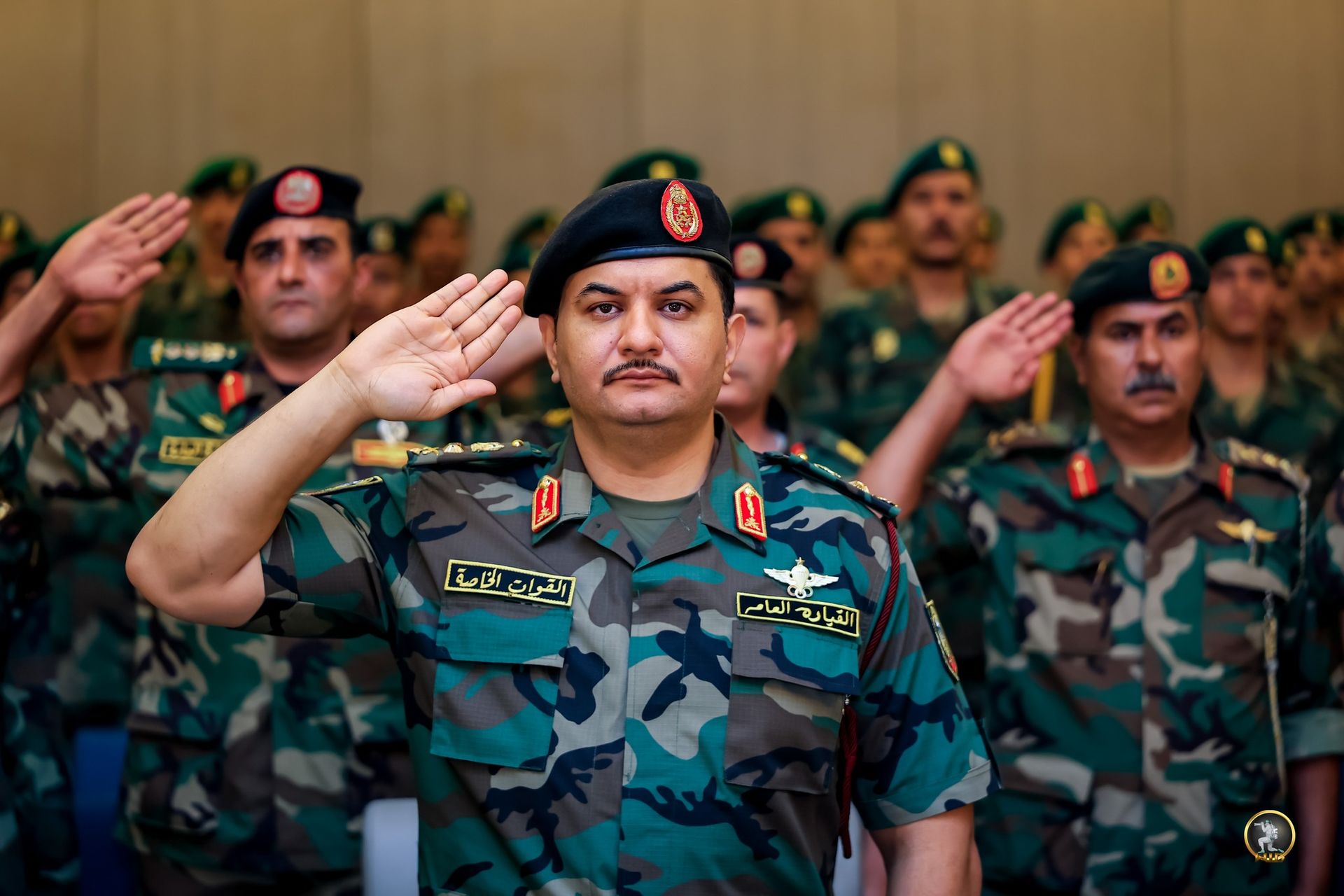
His rise through the ranks has been swift yet structured. As commander of the Tariq bin Ziyad Brigade, he oversaw its transformation into one of the Libyan National Army’s elite units. His leadership during the 2023 Derna flood relief operations further solidified his standing, leading to successive promotions and his appointment as Chief of Staff of the Land Forces before assuming his current role.
Beyond the battlefield, Saddam Khalifa has emerged as a key figure in military diplomacy, representing the General Command in high-level engagements across the United States, Russia, the UAE, Jordan, and other strategic partners.
Equally notable is his focus on reconstruction, national reconciliation, youth empowerment, and religious and social values—elements that together define a leadership style aimed not only at security, but at long-term state-building.